
THATCHING SERVICES.
Large scale thatching projects to small restorations.
At South West Thatching, traditional craftsmanship sits at the heart of everything we do. We specialise in all aspects of thatching, from complete roof renewals to repairs, maintenance and new builds.
Working across Cornwall and the South West, we use both water reed and combed wheat reed, applying traditional techniques alongside modern methods where appropriate. Every property is different, and we work closely with homeowners to create a roof that suits the character and style of the building.
Thatching Services.
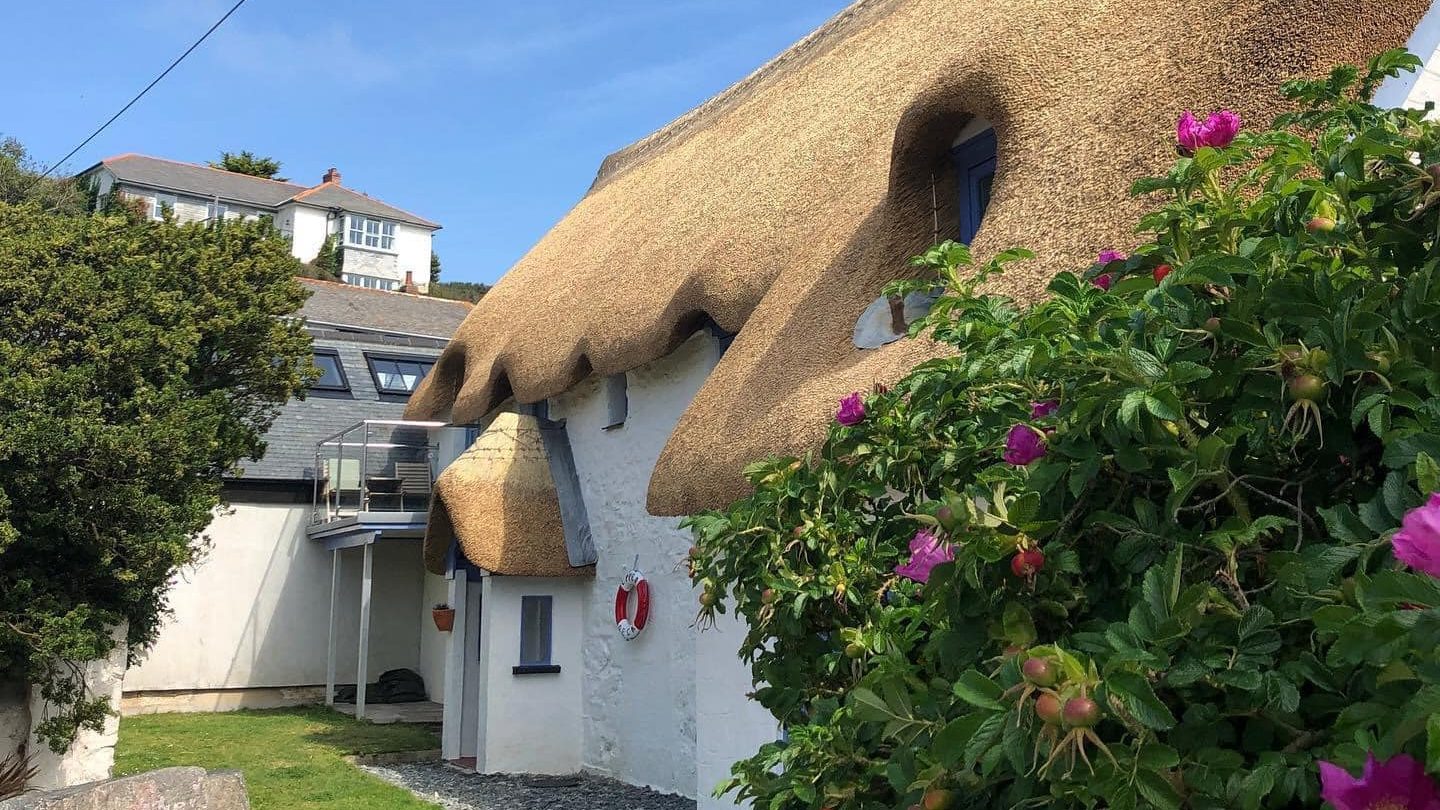
Thatch Renewal
Over time, thatched roofs naturally wear and will eventually require renewal. We provide complete re-thatching services using traditional materials such as combed wheat reed and water reed, carefully replacing worn thatch while maintaining the character and appearance of the building.
Each roof is assessed individually to determine the most suitable materials and techniques. Our aim is always to create a long-lasting roof that respects the traditional style of the property and the surrounding area.
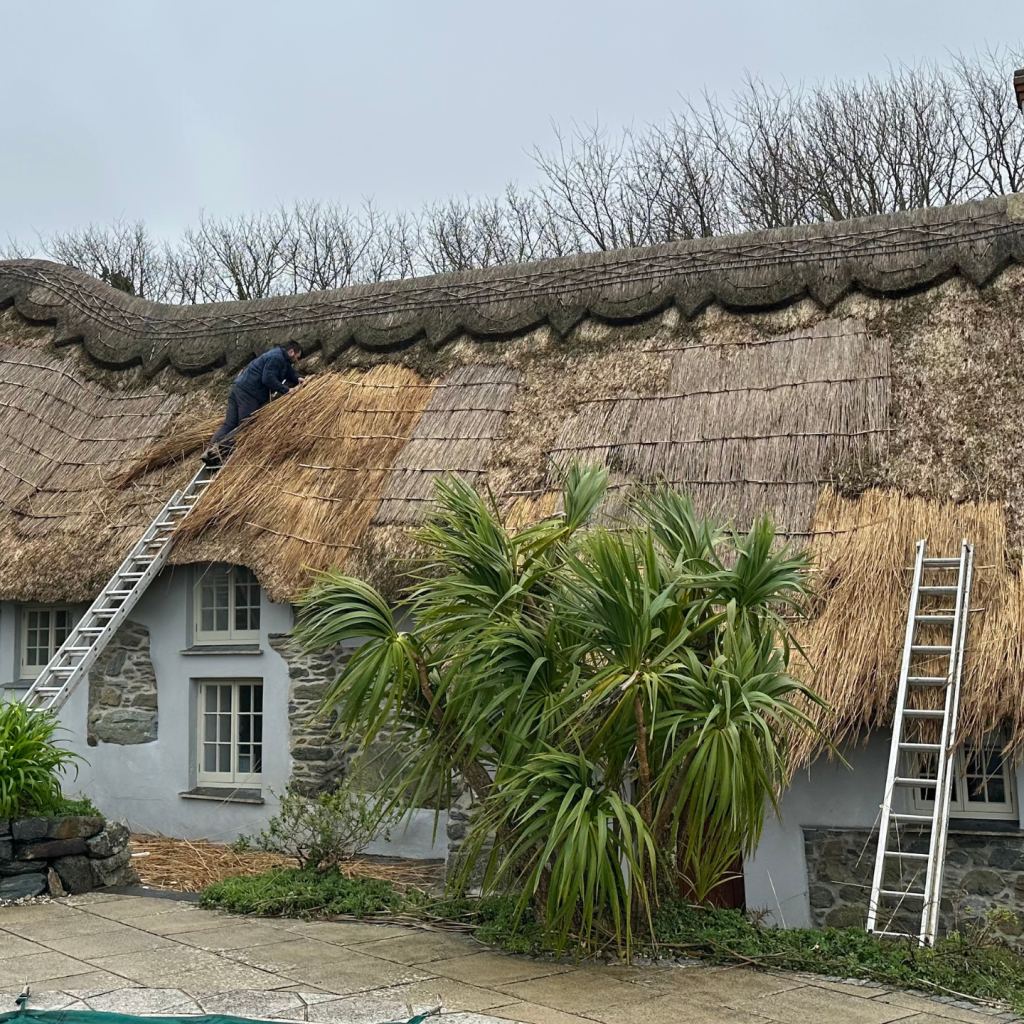
Repairs
Thatched roofs are incredibly durable, but like any natural roofing material they can occasionally require repairs. Storm damage, bird or vermin activity, and natural wear can all cause small areas of thatch to deteriorate over time.
We carry out a range of repairs, from quick temporary solutions to more permanent patch repairs that blend seamlessly into the surrounding roof. Our aim is always to keep your property protected while maintaining the appearance and integrity of the original thatch.
Ridging
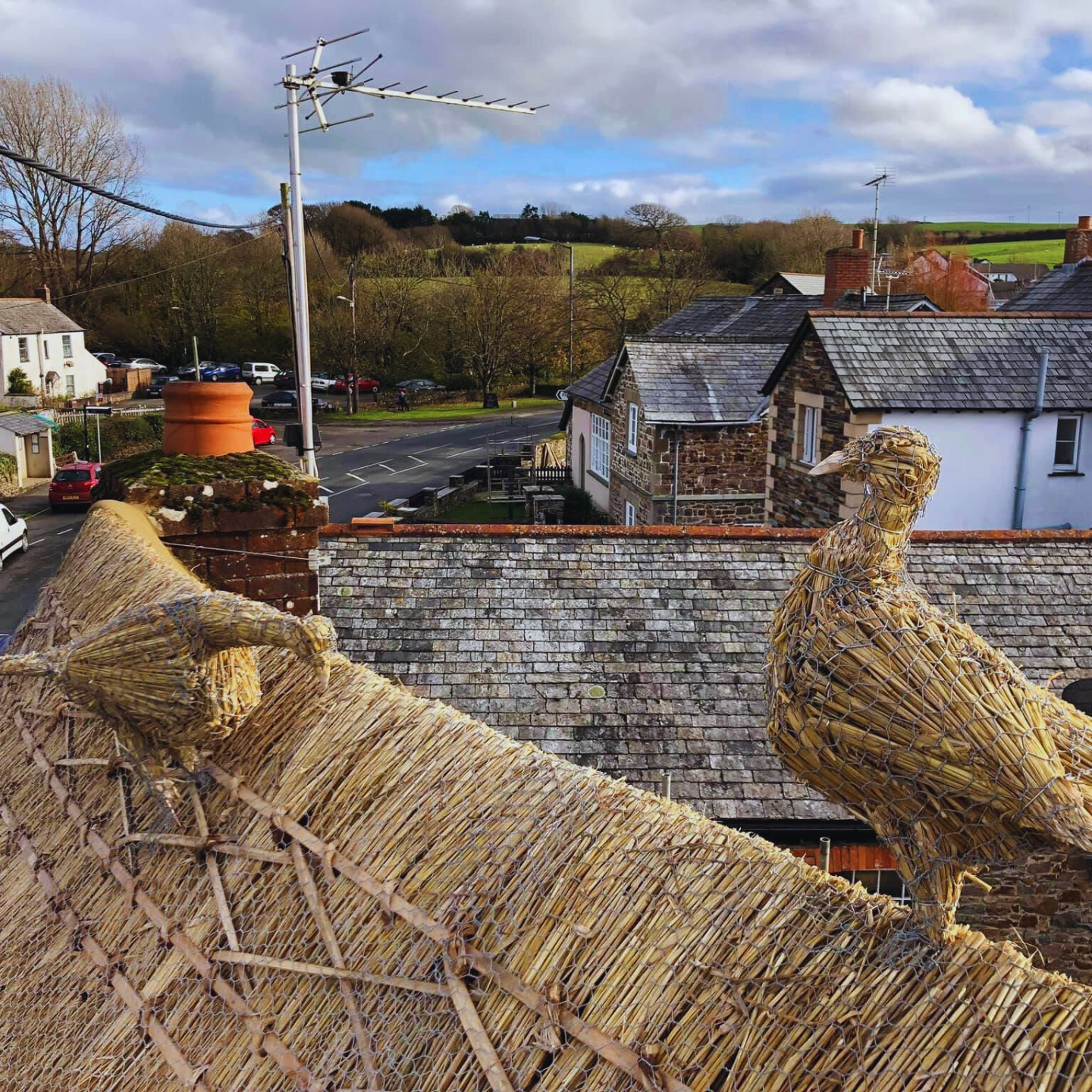
The ridge is one of the most important parts of a thatched roof and typically has a lifespan of around 8–10 years. During the lifetime of a newly thatched roof, the ridge will usually need to be replaced once or twice. Because it sits at the highest point of the roof, it is also the most common place for leaks to occur, so keeping the ridge well maintained helps protect the rest of the roof from water damage.
We offer a choice of two main ridging styles, both of which can be adapted to suit the character of your property.
The first is a traditional flush-cut ridge, which is the most common style seen across Cornwall and suits many thatched buildings in the region. The second is a pattern-cutridge, where decorative patterns are cut into the ridge using combed wheat reed. This style allows for a variety of designs, with the popular scallop-point finish being one of the most frequently requested.
There are also different ways the ridge can be finished. A wrap-over ridge runs over the top of the roof, while a more traditional butt-up ridge sits with the butts of the reed meeting along the apex. Another decorative option is a rope finish, where the reed is twisted to create the appearance of a rope along the ridge line.
All our ridges are completed with a protective wire mesh to help prevent damage from birds and vermin while maintaining the traditional appearance of the roof.
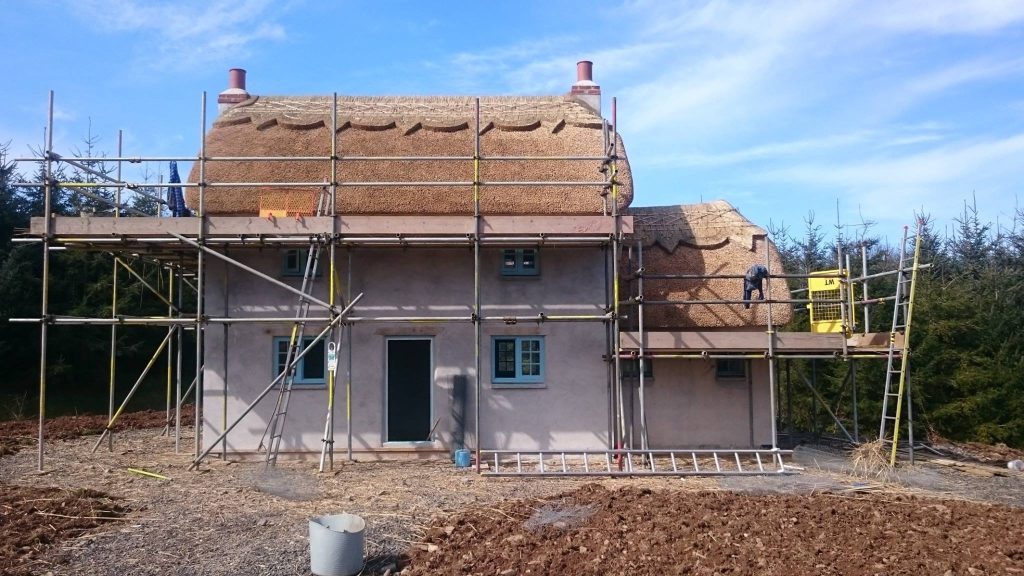
New Builds & Extensions
As well as working on historic buildings, we also provide thatching services for new builds and extensions.
We can deliver the complete roofing package, including the installation of roofing timbers, fire protection measures such as fire boards or fire felt, and the final thatch itself. We work closely with local builders, oak frame specialists, cob experts and other trades to ensure every project is completed safely and to the highest standard.
If you are planning to extend your home but are unsure how it will affect your thatched roof, there’s no need to worry. Working alongside your builder, or one of our trusted local trades, we can seamlessly integrate new thatch into your existing roof.
Whether you are adding an extra room, extending your living space or building a garage, we ensure the new work blends naturally with the original thatch so the finished roof remains consistent with the character of the property.
We also create smaller thatched structures for gardens and outdoor spaces, including gazebos, summer houses, pool huts, hot tub covers and traditional thatched porches. These features add character while bringing the traditional craft of thatching beyond the main house.
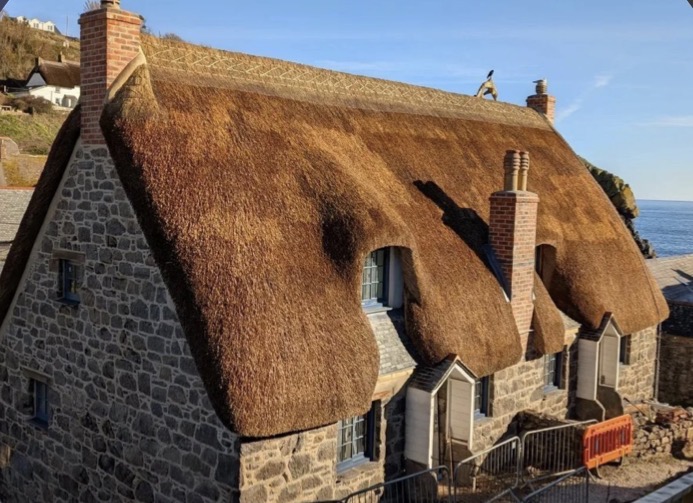
Cob & Chimneys
Many traditional thatched buildings incorporate cob construction and chimney structures that require specialist knowledge when carrying out roofing work.
Although we already have a vast knowledge of Cob and chimney work we also regularly work alongside experienced cob and chimney specialists to ensure the roof and surrounding structure are restored and maintained correctly.
This collaborative approach ensures that every aspect of the building works together safely while preserving the character of traditional properties.
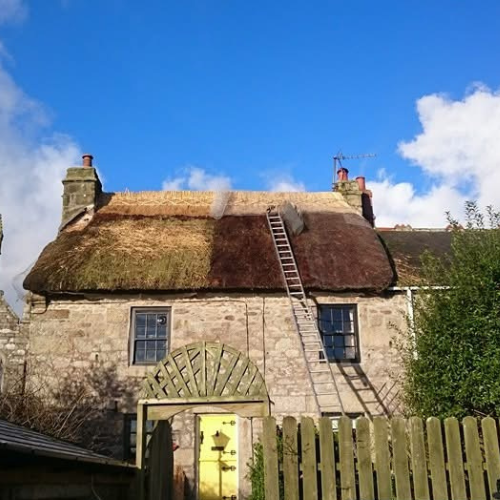
Maintenance
Regular maintenance is one of the best ways to extend the life of a thatched roof. By keeping on top of minor issues and carrying out preventative work when needed, we can help ensure your roof remains weatherproof and in excellent condition for many years.
We can deliver the complete roofing package, including the installation of roofing timbers, fire protection measures such as fire boards or fire felt, and the final thatch itself. We work closely with local builders, oak frame specialists, cob experts and other trades to ensure every project is completed safely and to the highest standard.
Maintenance work can include inspecting the condition of the ridge, addressing small areas of wear, and advising on ways to prevent damage from birds, vermin or weather.
Frequently asked questions.
Get in touch.
If you’re planning a new thatched roof, repairs, or a complete renewal, feel free to get in touch to discuss your project or request a quote.